

Happening Again #50
The big half-century

Hello!
Fifty! Five-zero. Fifty editions of this silly little newsletter and I couldn’t be more grateful that people are still reading. To all of you who read and subscribe, thank you. Although this isn’t the last issue of the year, I already have my eyes set on 2026. There’s a lot of good stuff on the way.
Anyway, here’s what I’ve been spinning recently…
Are you a musician? Do you have a certain band or artist you think I should be listening to? Drop them into the Happening Again inbox: wearehappeningagain@gmail.com
If you like what I do and enjoy reading these little send-outs, you can drop me a few quid in my ko-fi jar:
ko-fi.com/happeningagain

Loula Yorke
HYDROLOGY
DiN
Oram Award winner, educator, sound artist, and much more, it feels like Loula Yorke never stops. Easily one of the hardest working synthesists on the scene, her alluring compositions conjure minimalist electronic worlds like no other. Not a surprise then that her latest outing ‘Hydrology’ has found a home on Ian Boddy’s ever-excellent DiN label (a description I have used before and will no doubt repeat in the future). The six aquatic-themed tracks presented here are emblematic of Yorke’s approach to modular synthesis; delicate, meticulously crafted soundscapes that pulse like living organisms. There’s a playful bouyancy to ‘Fontana’, where synth tones ricochet like rain drops hitting a puddle, while buzzing keys oscillate and spiral with an abundance of textures like a slowly building whirlpool on ‘Flumen’. And the opening gambit, the almost 12-minute ‘SICL’ flows like a river, veined with a motif that ebbs and flows, rich in synthesis that bubbles and ripples before dissipating into nothing. There’s never a dull moment with Yorke. She’s an artist in the truest sense, one with a clear vision that continues to push boundaries. Those wanting more should seek out her album ‘Volta’ from last year. You won’t be disappointed.
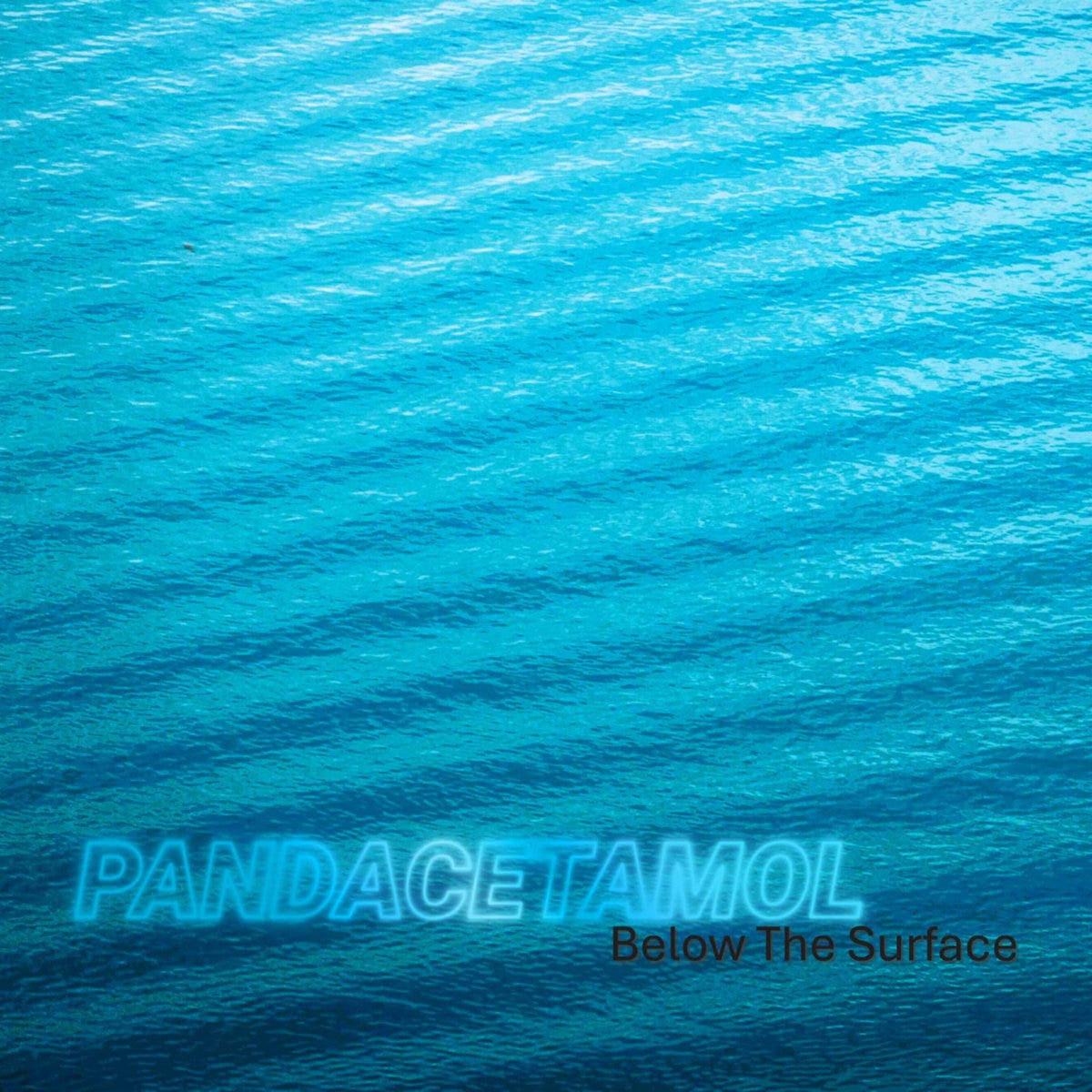
Pandacetamol
BELOW THE SURFACE
Mahorka
I’ve written before about the spider’s web of electronic music, the connective tissue that draws bridges between labels and musicians in ways you sometimes don’t expect, leading to a journey of musical discovery. And so it was that last issue I wrote about David Bourgoin’s very lovely ‘Cobwebs’ record, his debut on the Bulgarian Mahorka label under his Selective Hearing alias. It was from here that I went digging and discovered this by Pandacetamol. Originally a duo consisting of Paul Alexander and Mark Rushbury, Pandacetamol is now a solo vehicle for Alexander’s IDM-inspired soundscapes after the pair parted ways in 2016. ‘Below The Surface’ sees him return to Mahorka after a three year break, and is his debut working solo after a string of collaborative releases. And as solo debuts go, this is a cracker. ‘Cold Horizon’ warbles with an otherworldly eeriness accompanied by the hiss of pattering percussion, while the deep bassy throb of ‘Hall Of Broken Mirrors’ expands outwards into shimmering radiophonic whirs like something from 70s-era ‘Doctor Who’. A personal highlight is ‘Dry Cantina’, chuntering with analogue grit, angular and industrial with a sprinkling of sci-fi ambience. For a first outing on his own, Alexander has played a blinder. Thank God for that spider’s web. I wouldn’t have discovered him otherwise.
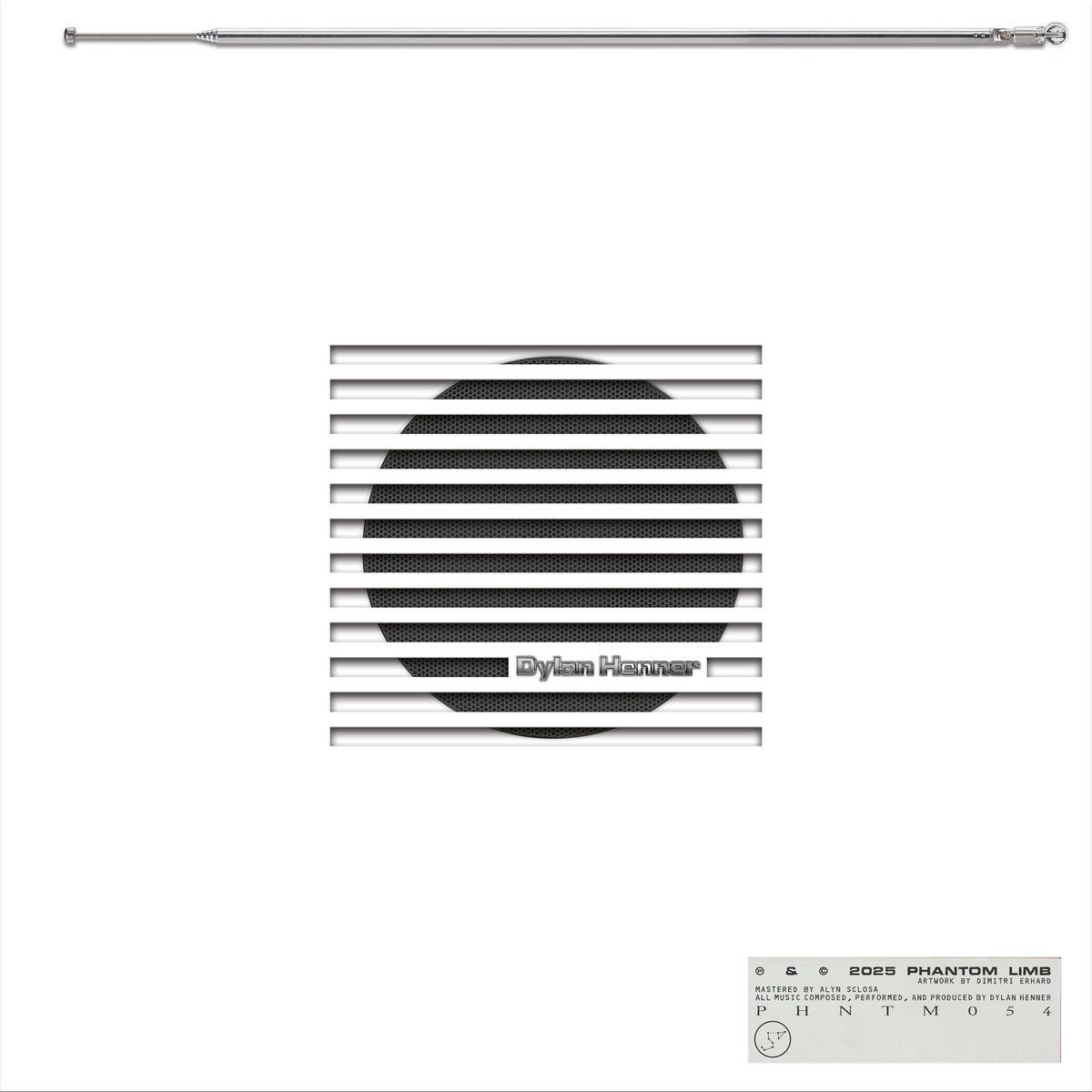
Dylan Henner
STAR DREAM FM
Phantom Limb
It’s no secret that I’m a fan of plunderphonics. The art of creating sound collages out of recognisable works, and twisting them into something new; deconstructing audio and turning it into something entirely different. Plunderphonics might be a too simplistic description of this new record by Dylan Henner. The story behind it is great. “Late one evening, I was listening to the radio alone at home. I couldn’t find the station I wanted, so I shifted the dial around for a while,” he explains.
“I found a station I’d never heard before. To my amazement, the station was broadcasting my own memories. I called some friends and asked if they could find the same frequency, but no-one did. I stuck a blank tape into my hi-fi and hit record. At some point I heard the jingle and the name of the station: ‘Star Dream FM’.” Like an aural version of Jane Schoenbrun’s ‘I Saw The TV Glow’, and complete with long, almost poetic song titles, ‘Star Dream FM’ definitely has that clandestine, middle-of-the-night vibe to it. Opener ‘I Borrowed My Dad’s Car…’, floats with gentle atmospheres laced with choral voice, while the haziness of ‘Her Parents Were Out So We Shared A Joint…’ its singular, warm tones acting as a backdrop to glitchy, warped vocals, builds into a crescendo of angelic vocals, as though Saint Peter himself is behind the synthesiser. I really love ‘We Were Dancing In Her Bedroom And Then We Made Out’ - you could almost see it soundtracking a film, the electronics twinkling like starlight that explode into a burst of triumphant arpeggios; that moment when the boy gets the girl. Autobiographical or not, Henner has a way of transporting you to a particular place or feeling with such deftness it’s like you were really there. Now if you’ll excuse me, I’ve got a radio frequency to try and tune into.
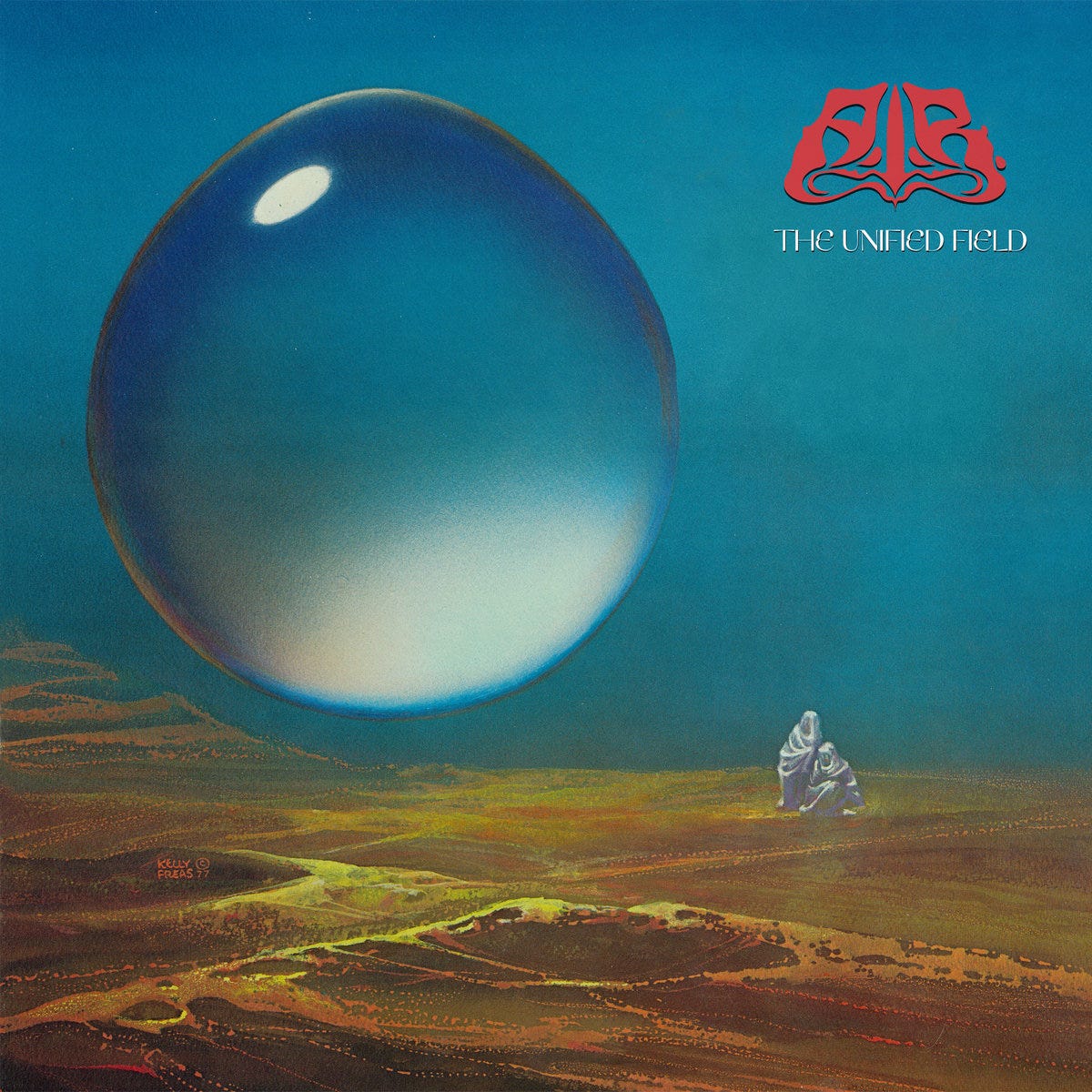
All India Radio
THE UNIFIED FIELD
Spectra
Not to be confused with India’s state-owned public broadcaster, All India Radio are a Tasmanian electronic group founded by musician Martin Kennedy in 1998, who is the only constant member of the band. They’re a proper melting pot of sound, with a sonic palette that includes sci-fi atmospherics, ambient prog, and lo-fi downtempo. According to some sources this is their 21st studio record, though it’s hard to keep count - they’re pretty prolific, having released all manner of singles, EPs, remix albums, and demo collections. “Lynchian” is a descriptor that’s often overused and wrongly applied, but it couldn’t be more apt here. The whole album is a tribute to the director, with song titles that directly reference his work, and a sound that, in the band’s own words, captures “the moody atmospheric aesthetics of David Lynch’s cinematic world”. With noodling shoegazey guitars aplenty, ‘The Unified Field’ is a wonderful tribute to a man who felt like he’d live forever. Dark ambience blows like wind through a guitar melody on ‘The Red Room’, as echoing snippets of Lynch’s own voice speak on the theory of the Unified Field. ‘Wisteria’, likely a reference to Lynch’s unrealised Netflix project, is proggy, that oscillating bass an anchor to the shimmering synths and melancholic guitar melody. The tender, airy ‘Catch The Breeze’ recalls Julee Cruise, while those reverbed chords that ripple across ‘Drifting’ distinctly reminds me of ‘No Stars’ by the late Rebekah Del Rio, a track she collaborated with Lynch on for ‘Twin Peaks: The Return’. It’s a sad truth of reality that Lynch and many of his collaborators, have moved onto their next journey from this mortal coil. ‘The Unified Field’ is a fitting tribute to the man, and functions wonderfully as an album in its own right.
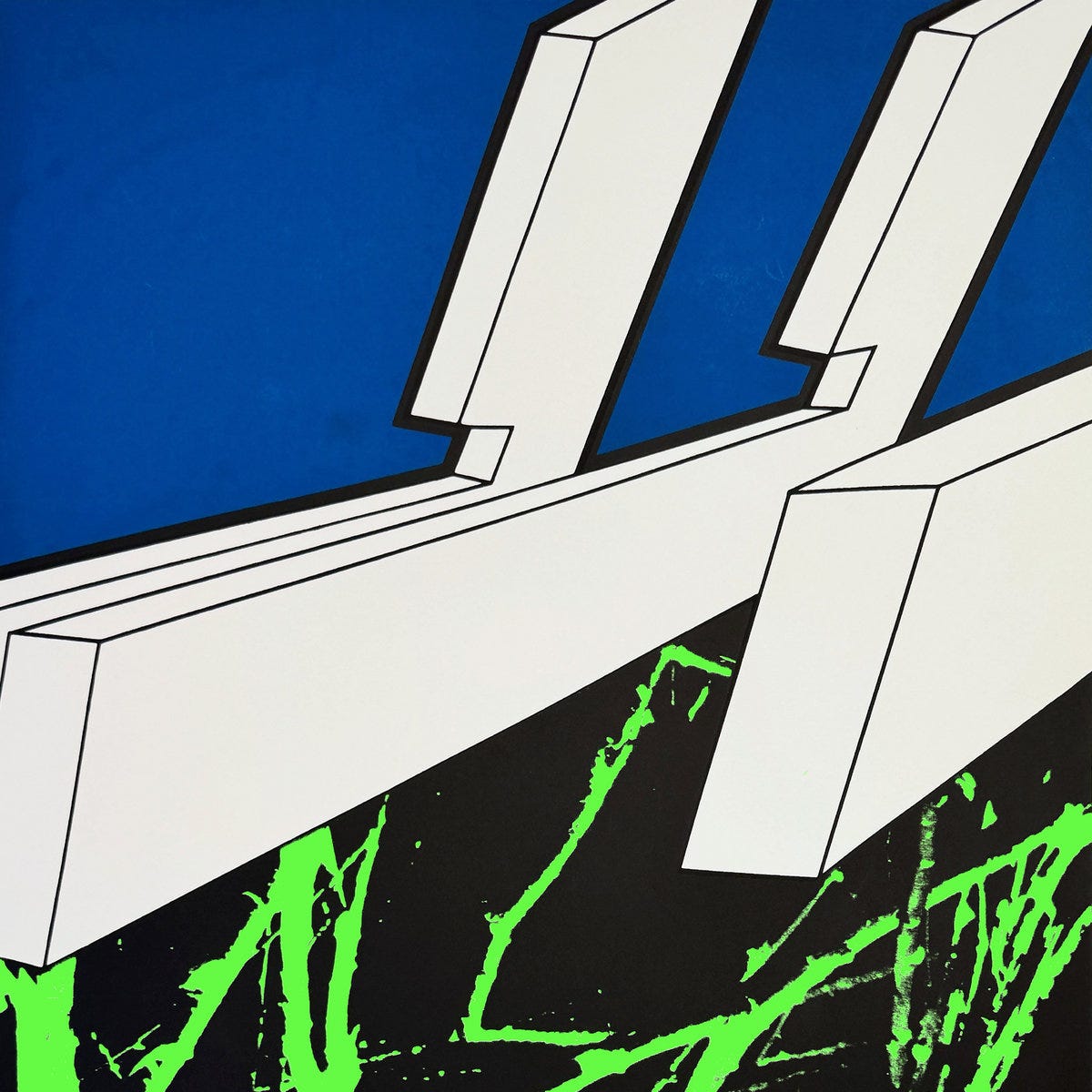
Oneohtrix Point Never
TRANQUILIZER
Warp
Daniel Lopatin uses the end of the 20th century as his focal point for his eleventh album. ‘Tranquilizer’ features a sonic palette formed from a set of commercial sample CDs that Lopatin found on the Internet Archive from the 90s. Upon discovery, Lopatin bookmarked the page with an intention to investigate further at a later date, but when the time arrived he found that they had been deleted. It was only when he was making 2023’s ‘Again’ that he discovered it had reappeared (there’s a great interview with Lopatin in this issue of Tone Glow about the process that I highly recommend). While there’s an element of ambience to the 15 tracks included here, they’re far more kinetic and kaleidoscopic to be simply labelled as such. I love how Lopatin has coaxed out a certain level of nostalgia with these sounds, without them ever sounding dated. The 90s ideal of what constituted to “the future” can be heard through the space age tones and Encarta-like chimes of ‘Bell Scanner’; ‘Cherry Blue’ is a digital menu of blips and hisses, with a Vangelis-esque synth turn around the mid-point; there’s a subterranean feel to ‘Vestigel’, like walking through a cavern generated from dot matrices; and ‘Rodl Glide’ is like forcing two repelling magnets together, a smooth R&B rhythm slowed to a crawl that’s then electroshocked into a flurry of chunky techno and vibrant rave. You can tell Lopatin had fun making ‘Tranquilizer’. Which is great, because I had a lot of fun listening to it.
That’s it for this time. As always you can find my ramblings elsewhere in both print and online in Electronic Sound. I am going to tentatively dip into the world of microblogging again, so follow me on Bluesky if that’s your sort of thing.
But before I go, here are some things from across the internet that have caught my eye…
Some Stray Thoughts
// Remember when the internet wasn’t filled with AI slop? Australian artist Tega Brain has created a scorched-earth solution to eliminate generative AI from the web. Slop Evader is a browser extension that only shows you search results from before November 30th 2022 (the day ChatGPT was released publicly). There are obvious downsides to this, but I thought it was interesting the lengths some people are going to pushback against this aggressive roll-out of a tool many find distasteful.
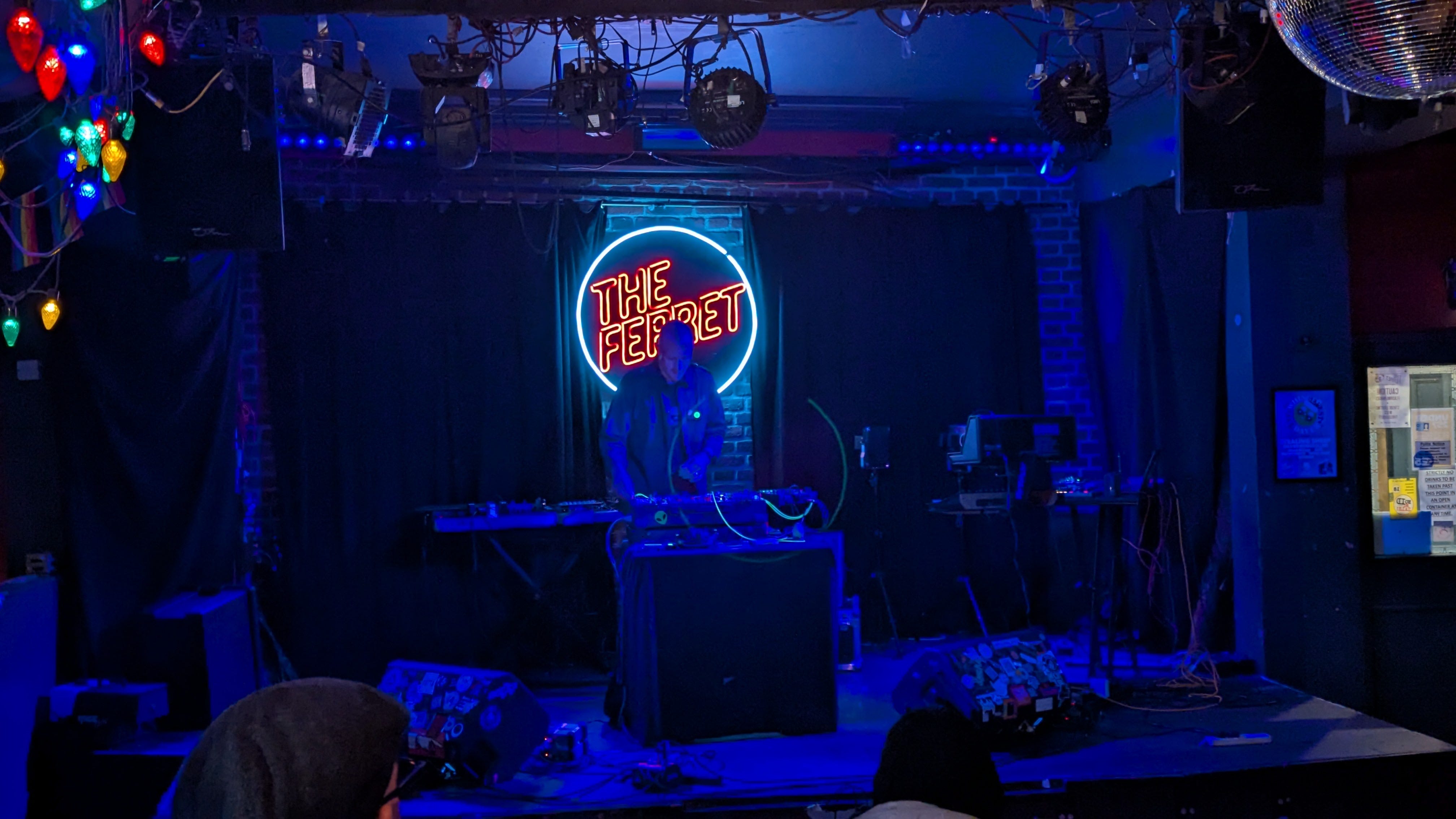
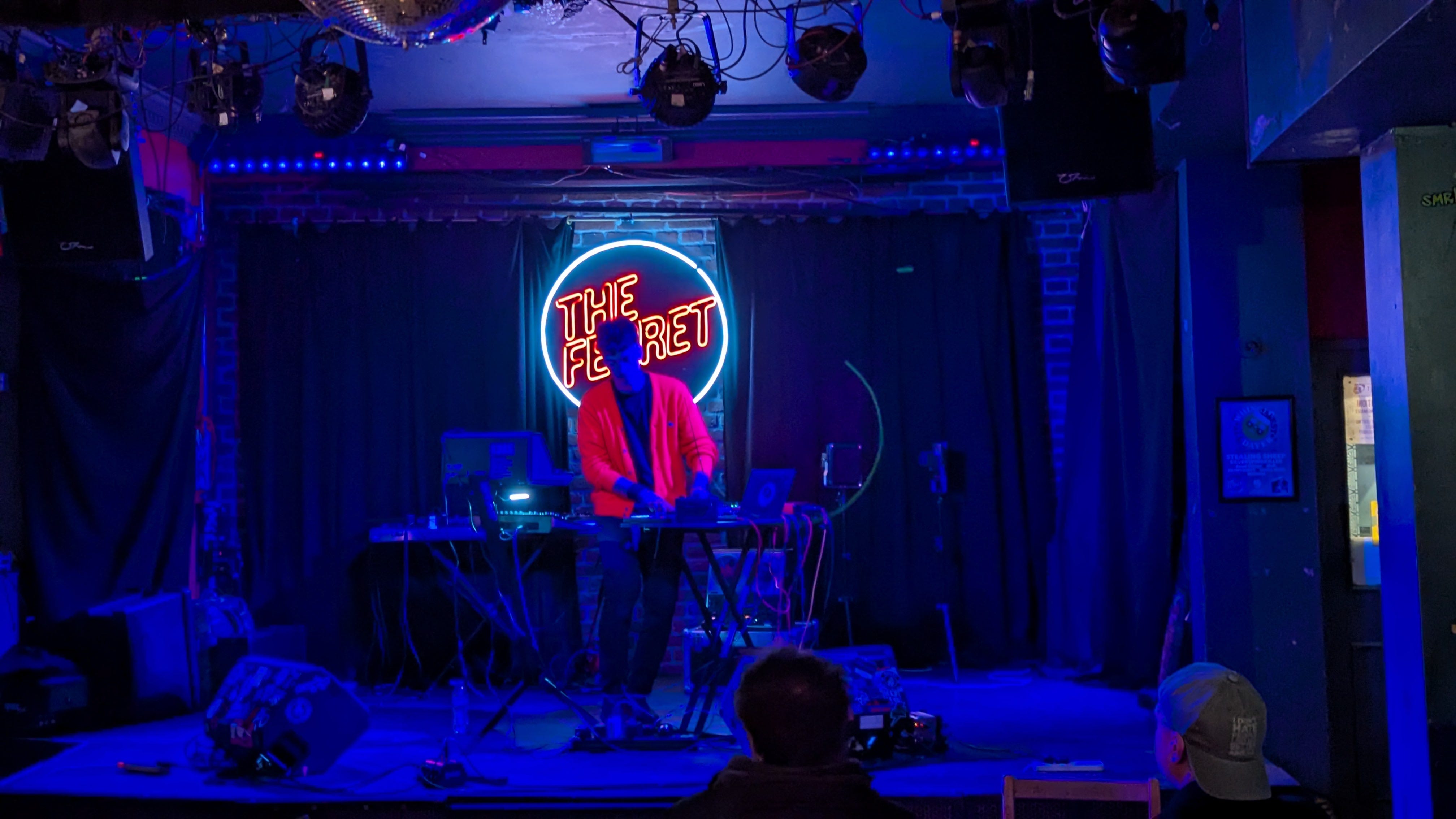
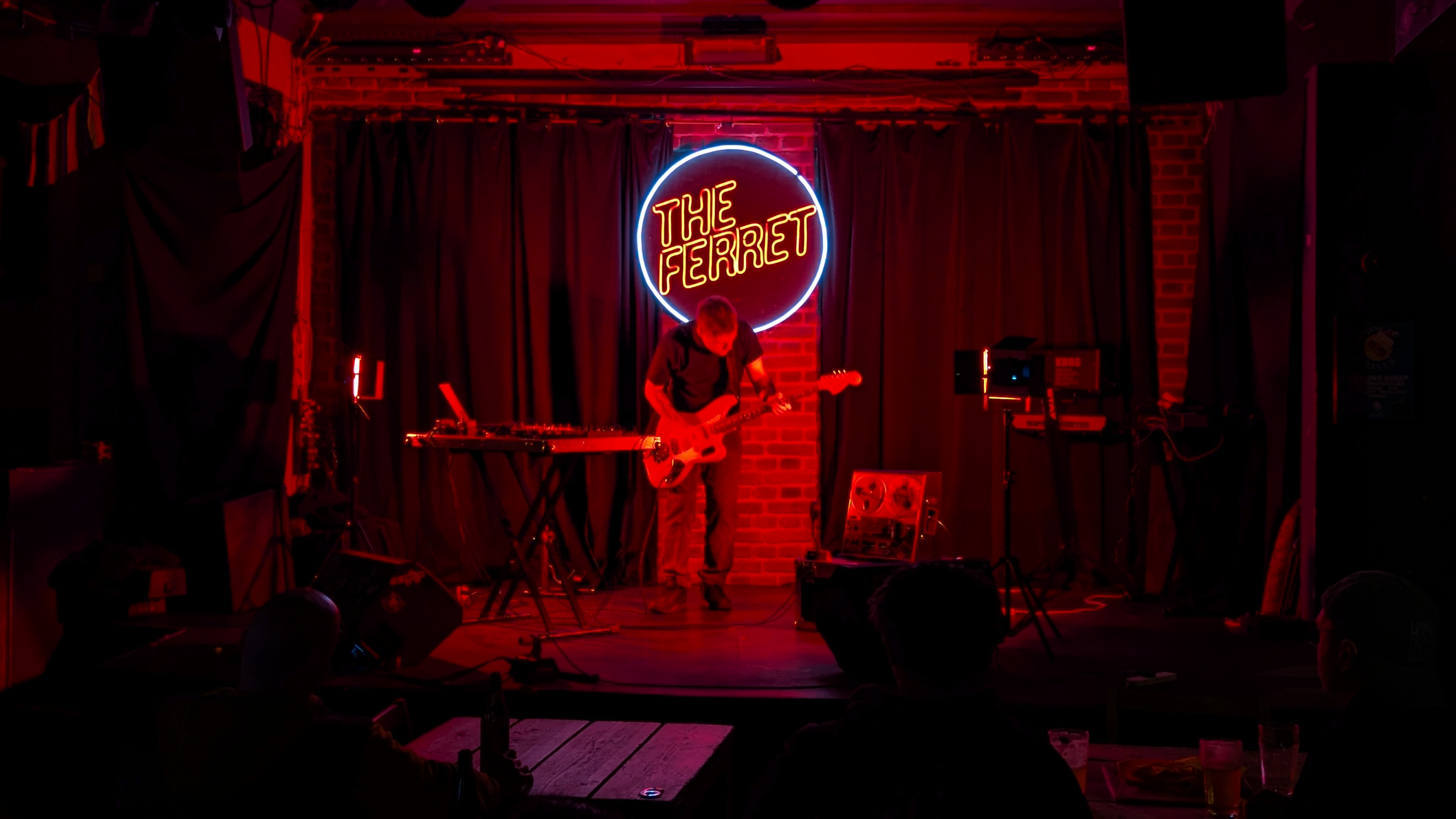
// It was a cold and icy evening last Thursday (20th) as I ventured out from the wilds of rural Yorkshire to cross the border into Lancashire for a night of DIY knob-twiddling. The Ferret in Preston hosted a triple whammy of analogue electronic excellence as James Adrian Brown, Sulk Rooms (Thomas Ragsdale), and Polypores (Stephen Buckley) took to the stage and transported us to their own unique sonic worlds.
First up was Polypores, whose technicolour soundscapes set the tone for the night ahead. Bright energetic polyrhythms that are impossible not to nod along to.
Brown was up next, slowing things down and taking us on a journey through dark ambient textures and industrial-licked electronica.
And finally, drenched in red light and armed with an electric guitar and reel-to-reel tape machine, Sulk Room’s cinematic soundscapes made for a fantastic finale.
It was great to see these guys behind their respective battlestations. JAB and Sulk Rooms round off their tour in Dublin tonight with the added bonus act of Kayla Painter. If you missed them this time, do try and catch them at some point next year if they’re playing near you. There’s no better time to support independent artists, particuarly those of the DIY electronic variety.